Contents:
- The Best Pro Floral Photography Lighting Setups (Quick Guide)
- Why Lighting Matters: The Real Difference in Flower Photos
- Natural Light Setups: The Florist’s Best Friend
- North-Facing Window Magic
- Midday Sun: Control with Sheers
- Comparing Pro Lighting Gear for Floral Photography
- Continuous Lighting: LEDs, Softboxes, and Studio Tricks
- Why Choose LEDs?
- Using Softboxes and Diffusers
- Off-Camera Flash: Crisp, Dynamic Flower Images
- Speedlight Essentials
- Layering with Ambient Light
- Essential Accessories: Reflectors, Backdrops, and Gels
- Reflectors: Your Cheapest Upgrade
- Backdrops for Instagram and Etsy
- Gels for Creative Tints
- Top Mistakes to Avoid in Floral Lighting
- FAQ: Pro Floral Photography Lighting
- What’s the best lighting for photographing flowers indoors?
- How do I prevent harsh shadows on flower photos?
- What color temperature should I use for floral photography?
- Can I use a smartphone with pro lighting setups?
- How much does it cost to set up pro floral lighting at home?
- Ready to Upgrade Your Flower Photos?
Pro Floral Photography Lighting Setups
Your grandmother’s peonies glowed under the spring sun. But try photographing that same bloom indoors, and suddenly the blush pink looks brown, petals flatten, and every pollen speck screams for attention. Here’s the thing: Light makes or breaks flower photos. Professional florists know beauty sells, and photographers know the right lighting turns a humble bouquet into art.
The Best Pro Floral Photography Lighting Setups (Quick Guide)
Want crisp, vibrant flower photos? Use these pro lighting setups:
- Natural window light – Soft, north-facing daylight is unbeatable for true colors.
- Continuous LED panels – Adjustable daylight LEDs (like Godox SL60W) mimic sunlight and reduce harsh shadows.
- Off-camera flash with diffusers – A speedlight (e.g., Canon 600EX II-RT) plus a 24-inch softbox delivers dynamic, dimensional photos.
- Reflector fill – White or silver reflectors bounce light into shadowy petals for even exposure.
Pro tip from floral photographer Marissa Goldblum, MFA: “Combine window light with a reflector for museum-quality flower portraits.”
Why Lighting Matters: The Real Difference in Flower Photos
The gap between a flat Instagram snap and a cover-worthy floral still life? It’s not the camera – it’s lighting. According to a 2023 survey by the American Institute of Floral Designers, 68% of florists believe pro-quality lighting influences customer perception more than flower variety or arrangement skill.
Light brings out textures and layers in flowers, sculpts dimensionality, and preserves true-to-life color. With the US floral industry topping $19.1 billion in 2026 (Statista), standing out online means investing in your lighting – not just your blooms.
Natural Light Setups: The Florist’s Best Friend
Natural light is free – and with the right window, it’s often the most flattering option for flowers.
North-Facing Window Magic
Why north? In the US, north-facing windows get gentle, indirect sunlight all day. No blown highlights or muddy shadows. Place your arrangement on a table one to two feet from the window, turn off overhead lights, and use a white foam board on the opposite side to bounce light back. This softens contrast and brings out every velvety layer.
In practice:
- Best for: Pastel bouquets, delicate petals (ranunculus, sweet peas)
- Typical setup cost: $0-$30 (just the foam board reflector)
Midday Sun: Control with Sheers
No north window? Hang a sheer white curtain and shoot during the brightest part of the day. This diffuses harsh light into a creamy glow.
“With a $10 IKEA curtain and some patience, my tulip photos went from supermarket to Parisian florist,” shares Amanda Cheung, head florist at Chicago’s Fleur & Stem.
Comparing Pro Lighting Gear for Floral Photography
Not every studio light is right for flowers. Florists and photographers prize different qualities: color accuracy, ease of use, and portability.
| Setup | Best For | Approx. Cost (USD) | Key Advantage | Drawback |
|---|---|---|---|---|
| Natural window + reflector | Beginners, low budget | $0-$40 | True color, soft shadows | Weather dependent |
| LED panel (Godox SL60W) | Editorial, high volume | $130-$200 | Adjustable, flicker-free | Needs power outlet |
| Speedlight + Softbox (Neewer kit) | Dramatic, creative | $120-$300 | Control, portability | Learning curve |
| Smartphone ring light | Quick social posts | $15-$50 | Portable, simple | Flat light, small coverage |
Continuous Lighting: LEDs, Softboxes, and Studio Tricks
Professional floral photographers often swear by continuous lighting, especially in the unpredictable US Midwest or on commercial shoots for 1-800-Flowers.
Why Choose LEDs?
Today’s top-tier LEDs (like the Aputure Amaran series or Godox SL60W) offer high color rendering (CRI 95+). This means your magenta dahlias won’t morph into purple on screen. Dimmable, daylight-balanced lights let you sculpt mood and avoid the harsh spikes of flash.
- Price point: $130-$500+ per light
- Brands to trust in the US: Godox, Aputure, Neewer, Westcott
Using Softboxes and Diffusers
Pairing your LED with a 24-inch softbox or umbrella creates feather-soft highlights, hiding micro-blemishes and mimicking gentle daylight. For tight shots, try a 16-inch octabox right above the bouquet. Place a white board underneath for that dreamy, “floating” vibe.
Studio hack: For bold shadows, move the light to the side. For full detail, position two lights at 45°, one slightly dimmer.
Off-Camera Flash: Crisp, Dynamic Flower Images
Floral photographers shooting for event florists or national brands – think UrbanStems or FTD – often add flashes to freeze movement and control every variable.
Speedlight Essentials
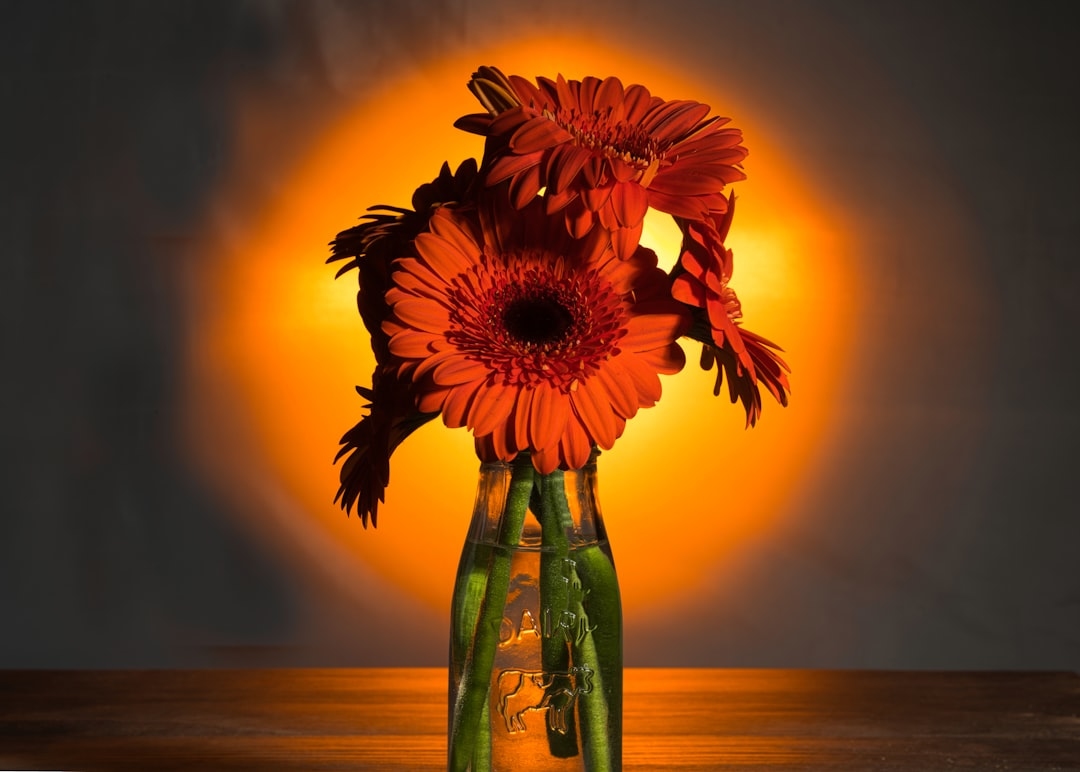
A wireless speedlight like the Canon 600EX II-RT or Godox V1, triggered off-camera, creates snap and pop. Always pair it with a diffuser: a softbox, umbrella, or even a pop-up white cube.
- Speedlight tip: Start at 1/16th power, ISO 200, f/4.0, and adjust as needed.
- Budget: $120-$350 for a flash, $30-$100 for a wireless trigger.
Layering with Ambient Light
Mixing flash with window light? Balance exposures so petals don’t “blow out” – set your camera to underexpose by 1/3 stop, then add flash fill.
“Flash isn’t scary – it’s your paintbrush. With flowers, the tiniest pop of extra light makes colors electric,” says Brooklyn-based photographer Tessa Rinder, author of ‘Light Petal, Heavy Petal’.
Essential Accessories: Reflectors, Backdrops, and Gels
Reflectors: Your Cheapest Upgrade
A $20 collapsible reflector (Neewer or Impact brands) in white or silver instantly brightens shadowed petals. Silver adds sparkle, white keeps things soft. Even an 8×11” foam core sheet from Michaels does the trick.
Backdrops for Instagram and Etsy
US buyers love moody, textured backgrounds: think linen, black velvet, or weathered wood planks. Seamless paper (Savage Widetone) runs $25-$55 per roll.
Gels for Creative Tints
Want that sunset-warm blush on your white peony? Mount a colored gel (Rosco or Lee Filters) over your light. Start with orange (CTO) or rose for a natural vibe – avoid blue, which can kill the softness.
Top Mistakes to Avoid in Floral Lighting
- Harsh top-down light: Flattens petals, exaggerates pollen and dust.
- Wrong color temperature: Avoid mixing daylight (5500K) and tungsten (3200K) – look for a color temperature (Kelvin) dial on your light.
- Underlighting red flowers: Reds clip quickly. Slightly underexpose and fill shadows with a reflector.
- Ignoring petal translucency: Thin petals (anemones, poppies) can look magical when backlit – but only with careful diffusion.
FAQ: Pro Floral Photography Lighting
What’s the best lighting for photographing flowers indoors?
Natural, indirect window light is best for most flower photography, especially from a north-facing window. For consistent results, many professionals use daylight-balanced LED panels with a softbox to create soft, even illumination.
How do I prevent harsh shadows on flower photos?
Use a diffuser or softbox to spread light evenly. Adding a white reflector or foam board on the opposite side of your main light will fill in shadows and create a balanced look.
What color temperature should I use for floral photography?
A color temperature between 5000K and 5600K mimics daylight and gives flowers true-to-life color. Mixing different light temperatures can result in unnatural hues, so stick to one consistent source if possible.
Can I use a smartphone with pro lighting setups?
Yes! Good lighting benefits all cameras, including smartphones. Use LED panels or a window with a reflector, and your phone can produce near-professional results.
How much does it cost to set up pro floral lighting at home?
Starter kits using natural light and a reflector cost under $50. Upgrading to a continuous LED and softbox setup usually ranges from $150-$400. Many US-based hobbyists and florists find high-quality results with budgets under $250.
Ready to Upgrade Your Flower Photos?
Bring home a $30 foam core, a sheer curtain, and a $100 LED panel, then watch your bouquets come alive. Try one new lighting setup each week–record the differences. Lighting isn’t just an upgrade for your photos; it’s a game-changer for your business, your creativity, and that moment a single bloom takes your breath away.
Experiment boldly. Flowers deserve nothing less.